
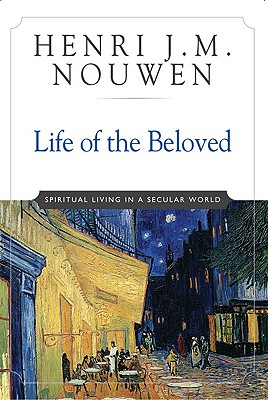
Recently, our Life Group at church did a study of the book, Life of the Beloved, by Henri Nouwen. It is a fantastic book and worthy of its own in-depth review, but this post is more about how the book was taken by the man it was actually written for, Fred Bratman.
Henri was challenged to write the book by Fred Bratman, who is a secular Jewish man, to explain the Christian spiritual life without relying on spiritual language. So Henri got busy writing trying to explain his faith and belief in Christ to his friend in letter style in the book.
In the book, Henri argues that most people spend their lives trying to be worthy of love, and that God’s love is not something we have to earn, but merely accept and live within that truth. Ad amazing as that truth is, the whole message of the book failed in Henri’s motive.
We were ending our study, and I was curious, did the book succeed in convincing Fred that Christ loves him and that he should accept the free gift that God offers to everyone? Did the book succeed in convincing Fred that he is in fact beloved? As far as I can tell, no.
From what I could find, when Henri finished the book, Fred read it and said that it was still too religious and didn’t really communicate to the secular people it was apparently written for. Henri died on September 21st, 1996 at the age of 64 and for all his effort in writing this book, it failed to convert his friend. He died a failure in this task, or so some may believe.
As a writer myself, I often wonder if my writing will succeed in a way I think is meaningful. Now, not all my writing is meant to be meaningful. Some of it is just for fun, The Pillar of Smoke series comes to my mind; something that is just for fun. However, some of my other writing is meant to give an impact, like Prayers from the Valley, or Men of Valor.
However, like Henri and this book, God often has plans for our failures. Life of the Beloved has apparently sold over 200,000 copies world-wide. Henri’s books in total have sold over 7 million copies in over 30 languages throughout the world. His impact on the world and for Christ is beyond understanding. This book didn’t reach his friend, but it has reached so many others. God used his “failure” to impact His kingdom for the good.
So often, we look at our failures or non-successes (thinking of my own writing) and how disappointing it is. But God can use our failures. My father tells a story where he witnessed to someone recently and walked away feeling like a failure. He had “failed” as leading the person to Christ. He was asking why God had led him to witness, when the result was failure?
In speaking with him, I tried to give him insight into the very idea we are talking about today.
I said to him, “You don’t know how God will use that conversation. For all you know, this person will make fun of you, speaking their children about the crazy man who tried to convert him. Those children may realize what was said in love and turn to Christ because of how their father responded to you.”
God uses our failures, even if we never see the results. God uses our worst efforts to His ultimate good! He is able to accomplish more than we can ever imagine with our complete failures. Our failures are His glory. Trust in Him.
D. Michl Lowe

