I’ve concluded that there is apparently something deeply unlikeable and untrustworthy about me. There is a reality of who I am that others must see, that I do not. Maybe those who truly care about me know. Maybe they have tried to tell me. Maybe they have tried to help me understand, and I have stuffed cotton in my ears and closed my eyes to their kindness. Maybe I have been willfully blind to my own shortcomings. Maybe I still am.
For the last couple of years, I had been through over twenty job interviews and had had no luck at all until just recently. For over ten years, I have been nominated for a leadership position but have never been voted into that position. And I don’t blame the voters; I believe they are voting truly and in good faith! It is myself that I see as a failure. It is an observation of my own persona. I would say I am lazy, but really, I don’t think that is it. I value being able to live with the money I make, but I struggle to see my efforts as valuable.
So, is this a depression, then? I assume so. I have heartache and am searching for passion and purpose. I would like to be a true writer, but I have never felt as though I am good enough to truly be called by the title author or writer. Am I proud of my books and writing? Yes, of course, but in the back of my mind, I continually downplay them and question their validity.
I love my family; they give me unending joy and satisfaction, but I feel inadequate at the task of being a father and husband as well. I wonder if this inadequate feeling comes from a lack of my ability to fully support them financially, but then again, maybe it goes beyond that.
I seek purpose in God but feel a failure there as well. I wrote a book in an attempt to harden my devotion and zeal for Christ, but even in all I have done, I feel a failure. As if I should have done more or not done enough. I understand there is continual growth in Christ, and I do see that growth within myself, but then I look back on where I was before. Back then, I thought I was wise, but truly, I was very foolish and didn’t know it. So how am I to believe I am now wise, knowing in ten years I may look back and see my current foolishness for what it is?
They call it a mid-life crisis, but the crisis is a realization of a lifelong inadequacy. How do you make a life worthy? How do you understand what you can change to make it better? There are some things you are locked into, some things that cannot be changed. How do you turn listlessness into motivation and purpose? I don’t trust myself to know that my answers are right.
So what am I to do? Am I meant to meander along, continuing to live in a miasma of stale living? Should I continue to be burdened by a raw and open self-inflicted wound to my ego? Or should I accept the truth, accept the truth that I am not good enough? That I am not worthy of praise? That I am not enough? Because I will never be enough. I can’t do it.
However, when I am weak—because I am weak—He is strong. When I am not enough—and I am not—He is enough. When I am lacking, and I am lacking, He is full and true. When I am down, and I have been down, He is more than enough to raise me up. When I am through with giving effort, and at times, I feel as though I am through, He is there to carry me on.
I am not enough, and I never will be. The reality is no one is enough. No one is truly able. We are all frail and slowly dying, the conscious dead. It is only through the light of Christ we become anything else. In truth, we are only ever meant to be the marionettes of God, allowing the Master to bring us to life and give us His purpose. Am I enough? Yes, but only because I am His. Do I have meaning? Yes, but only the meaning He brings to life within me?
I am the resurrected corpse, Lazarus. I’m stinking but smelling better as the light hits my gaunt face. Undecaying from my death – being brought back into the world of the living, color returning. It is not I who now lives, but Christ who has chosen to live within the destitution of my life, giving it a robust and full justification.
I had a dream about a dead person. A person I knew long ago. I didn’t know this person as an adult, I knew them when I was just a kid, a kid in high school. In the dream, we were at a festival of some kind, there was music, and people milling around talking and having fun. People were meeting with old friends and chatting, there was laughter and good food. This person and I were going to perform in some way, I don’t know how maybe we were going to sing. Anyway, this friend of mine was doing some stage makeup for me.
This wouldn’t have been uncommon for this person to do this for me back in the day. They often did our makeup before the performances I was in; of which there were many. Anyway, she was doing my makeup, talking to me, gently whipping away mistakes, and just being their normal self. Suddenly, the haze of the dream was drawn away from my eyes and saw her. I knew she had died and knew I was in a dream. I stood up with intense sadness in my heart and began crying, the tears rushing down my cheeks.
Then she stood with me. “You’re dead,” I cried. “I know you’re dead, but you’re here.”
“I am here,” she said. “It’s okay. It’s really okay.”
I stepped forward and hugged my friend. It was a hug from years and years ago. When I was just a kid who was hugging a friend that he loved. She cried too, but her tears were not tears of sadness, but of joy that she was able to hug her friend again. I realized I was the only sad person at the festival. The people were around us were talking, laughing, and loving each other in friendship and family. It was a beautiful thing, and yet I continued to be sad.
I woke up, tears wetting my pillow, stunned. I’ve had several dreams like this in the last couple of years. Dreams where I have seen friends of mine who have gone on before me into the afterlife. My mother-in-law always says that when you dream about someone, that’s the Lord’s way of bringing that person into your mind to have you pray for them. What do I do with dreams of the dead though? I’m not completely sure. What I do know is that I pray for their families and those left behind.
I’ve lost several friends and family in the last several years and I think that may be catching up to me. Loss is a difficult thing. Sometimes, you weren’t as close as you would have liked to have been. Sometimes you were very close and the loss seemed personal, like the person’s death was a slight against you. Not that they wanted to leave, but that God wanted to harm you by taking them. The sadness and anger can be almost overwhelming. I don’t feel angry. I don’t blame God. Maybe I haven’t been hurt enough to feel that. All I know is, I miss my friend, and I’m glad I got to give her one last hug.
As a scholar of Riggleman Manor Archives, in good standing with the scientific and religious communities of Warrington. I, Nicodemus Pandit would like to present this general summary of the religions of Pillar and Bolster Heart to the community at large. I do this in order to bring about a basic understanding of them and lead the good peoples of this world into a way of belief that suits their interests and morality. As such, here is my list of the known religious beliefs of our world.
Akolian Religion: This is the religion where peoples worship the God named Akol, often referred to by His full name Akol Ramous. In this religion, they believe that Akol is the creator of all things and that he resides in a spiritual realm called Afterlife. From this realm, he is said to rule all beings. He is said to be nearly all-powerful, and nearly all-knowing, but is not considered omnipresent. Because He is not completely powerful, His adherents believe him to be a much more personal God than the Nameless. He is closer in relation to His creations and therefore much more involved in their day-to-day lives. Often people will pray to Akol hoping to gain his favor and hoping to call his attention to their plight or issues.
It is often important for the Akolian devotees to give thanks to Akol when things go well. Akol is most often considered male, even though He is not ever depicted as having a physical body. Several examples of scriptures from the long past have been found in archives and in these Akol is referred to as male, so that is how He is most often referred to. Adherents to this religion believe that when they die, their bodies will combust into flame (that much is not debated) and then their souls will go into Afterlife (the spiritual realm) and be with Akol for all time. This is achieved through good works and following the scriptures of Akol. The Smoke of a person who dies and goes up from the flames of their consumption is what they believe carries the person’s soul to Akol in Afterlife.
Worship of the Nameless: The Nameless is a deity to which the peoples of Pillar often worship when they reject the deity or belief of Akol Ramous. The Nameless is believed to be an all-powerful deity who has yet to make themselves known but is believed to exist due to the logical nature of there being some form of causer for the beginnings and endings of all things. While there are no scriptures per se about the Nameless, there are many philosophical writings about their nature. When considering the Nameless, it is believed they are all-powerful, all-knowing, and omnipresent.
As such, they are believed to be the creator of all things and the beginning and ending of all things, including life. The Nameless is not considered male or female, but a separate type of being with no gender at all. Believers of the Nameless say that one’s actions should be governed by an internal compass of morality. As such, each person is accountable for the good they are aware of. In this way, the amount of good a person adheres to within life will determine their afterlife and the good they experience there. If they are evil, they will experience evil. If they are good, they will experience good. This is no direct place peoples go to, but just an experience they will enter after death.
Enlightenment Worship: The worship of the Enlightened beings of Pillar. The enlightened beings of Pillar and Bolster Heart are the beings with the capacity to be aware of themselves and actively think about morality and others. As such, believers in this philosophy espouse that the greatest amount of good is seeking what is good for the most enlightened beings in any given circumstance. As such, they believe that debate and argument are some of the chief ways to understand morality. When in a debate, their rationale is not to change the mind of the person they are arguing with, but to win the argument and then to influence the people hearing the argument. When the greatest number of people are influenced, they see this as the greatest and rightest form of good and morality. While this might not seem like a formal religion, but more of a philosophy, the adherents would agree with you, but still consider this their religion. They do not believe in an afterlife for enlightened beings, believing that their current life is the only life they are able to live and as such should make this life as good as they can, given it is all that there is. Because of this, they are often given to excess and hedonism as well.
Flame Adherents: This is an off-shoot religion of the Enlightenment Worshipers which was discussed above. The Flame Adherents religion is one where the peoples worship the fact that all enlightened life comes to an end in the Flame of Consumption as they call it. If you will remember, in the world of Pillar, whenever an enlightened being dies, fifteen seconds after death, their bodies burst into flame and are completely consumed by this flame until only ash remains. This is a normal end to enlightened life on Pillar and is distinct to only enlightened beings. Non-enlightened or as they are often called, “wild” beings who are not thinking and rational beings are not consumed in fire upon death.
Their corpses remain intact. They believe that because only enlightened beings are consumed in flame at the time of death, this makes those beings special in a divine sense. Many of the precepts of the Enlightenment Worship are maintained here, believing in the utmost good for the most enlightened beings, but a large difference between the two religions is the belief held by the Flame Adherents that the combustion in flame at the end of life is a signifying event that the enlightened beings will be brought into an afterlife of some sort, either good or bad.
Dragon Worship: This is the religion that exalts the worship of the Great Dragons who sleep throughout the world. There are four known Dragons who sleep within Bolster Heart and a rumored two others that sleep on top of Pillar, but no one knows where they reside. However, the people of this religion believe that one day the Dragons will awake to lead the enlightened peoples of Pillar and Bolster Heart to a promised land; a land where they will live forever with the Dragons in complete harmony.
Believers in this religion often pray to the Dragons by name, believing that they can hear them in their dreams and will cause favorable outcomes. Believers of this religion believe that upon death, they will enter an afterlife made up of the Dragon’s dreams, awaiting the time they will awaken with the Dragon and be led into the promised land with all those still alive. Upon death, they believe the Smoke from a person’s body after combustion is what transfers their soul to the Dragons.
Superior Humanism: This is a racist cult where the adherents believe that the human race is superior to all other enlightened peoples on Pillar. Races such as the Flemi (rabbit/human hybrids), Kyoten (sheep/human hybrids), and especially Brown-dogs (intellectually equal, but physically similar to wild dogs), are seen as less than the human race. This religion is not currently widely accepted in most regions of Pillar. The island country of Rathen is the only known place where this religion is openly practiced freely. As such, other races present in this country are often enslaved or outright killed in the name of Superior Humanism.
Soulism: Throughout the world, this cult is largely seen as evil and perverse. While this cult might seem similar to Humanism, it is very different. The adherents to this religion see themselves as an offshoot of Superior Humanism. Their beliefs line up with Superior Humanism completely save for one main difference. They do not believe that other races should be enslaved, but only that they should be killed. Along with that though, they see the smoke from those deaths as something that the other enlightened races stole from humans. As such, they often slaughter numerous peoples at a time and believe that breathing in their Smoke allows them to consume those beings’ souls and therefore restore balance to the world. They do not believe in an afterlife of any kind but believe that breathing in the Smoke of other enlightened beings will bring about power, wealth, and social status to them personally.
Atheism: This is the belief that there is no such thing as God or any form of the divine. As such, people who hold to this belief allow their own moral compass to guide their actions believing their personal beliefs and morals to the guide to right and wrong. They do not believe in an afterlife of any kind.
Nicodemus Pandit, Head Librarian for Riggleman Manor Archives
Taken from Religions of Pillar and Bolster Heart, by Nicodemus Pandit, Chapter 2, Section 1, Year: NL20317
My mother used to say, “When I die, just freeze me and pound me in the ground.” This is a great saying and honestly made me really think about what I wanted to be done when I died. Maybe that’s a morbid thing to talk about or think about, but honestly, it’s never been that big of a deal to me. My death is not the end of me. I know where I’m going and while I might not know all the details of what is going to happen, I am ready for it should it come soon. I do not fear death.
So I have been thinking about it for a long time now and I have realized that I am unlike many of my fellow West Virginians. The people of West Virginia value funerals… a lot. It is a big deal here. I however do not. While I understand why these rituals are valued, I myself do not value them at all. Well, let me step that back for a second. There is value to me, in that I see that they help people I care about go through the grieving process. That is valuable to me, but me personally, no.
I believe when I die, if my wife and children are still around (I hope), then I don’t want a funeral. I suppose that if the kids need something then that is fine, but honestly, I hope they don’t spend much money on it. If anything is needed to be done, then just have a picture of me up front at the church and have the pastor preach a short sermon. Then maybe people could bring some pot luck so people could eat and share memories of me, that would be great.
I have seen the bills that funerals leave behind. I don’t want to saddle my family with anything like that when I pass on. I don’t need a fancy coffin. I don’t need a new suit to wear. I don’t need formaldehyde in me to preserve me. In fact, I don’t need anything done to the body besides to get rid of it. That’s not me any longer. I am not in there. Who I am is no longer present with that husk. I am somewhere else, with someone else.
I understand that grief is a part of losing someone. I am okay with the grief, but it has nothing to do with my body. I have spent a little time looking into how to donate your body to science, but it seems like it is a more complicated idea than I first thought. It’s not like being an organ donor, where you just check the box and it’s taken care of. There’s a little more to it apparently. I need to spend some more time investigating it. I would rather allow my body to help future doctors learn than to make it all “pretty” so people can gawk at my body and say things like, “He looks so natural.” Yeah, I’m a fan of that.
Death, for me, is not a loss. Sure I don’t want to have it happen any time soon, there’s still a lot left to do on this plane, but neither do I shy away from it. I’m not worried about it. When I was younger, there was certainly some existential dread going on, but I think that was because I felt like there was still so much left to do. Much of those desires have been fulfilled for me. Let’s look at some of those, I got to marry the love of my life, and our life together has been fantastic so far and as much as I can tell, it will be for the future as well. I have three amazing kids who are already turning out fantastic. Now of course there’s a lot left to do with them, but they are here and will continue to be as fantastic as they are now, I have no doubt. I guess in the end, as my Momma said, “Just freeze me and pound me in the ground.”
I can’t remember exactly how old I was, but it had to be some time after I was seven years old because it was in our new house. Dad and I were scrounging around the attic when we came upon a cedar chest. Asking dad about it, he pulled it over and opened it. Inside, were piles of loose cut-out newspaper clippings and old yellow legal pads covered in handwritten stories, observations, notes, and editorials.
My grandfather Robert Lowe, was a prolific writer apparently. The newspaper clippings were all letters to the editor he had written about many issues that were concerning to him. Some of the writing was stuff he had copied down and others were original writings. In this box was a collection that in some ways laid out who my grandfather was. I know dad poured over the writings trying to get an understanding of who his father was since he had died when dad was only 13 years old. There was a sense that reading what he had written allowed an aspect of who he was to survive his death; beyond just pictures and memories.
I remember believing that the chest had great value. I still believe that. As his Grandson, I could find a lot of insight into my family and who I was by reading his work. That being said, much of what he wrote was not directly about him, but about things he cared about. I wanted some more personal writings; something that told me more about who he was, what his life was like, and how that fit into who he was. I wanted to know his thoughts and beliefs about life. I wanted to see who he was as a man. Some of his writings give that, but other times, it just wasn’t personal enough.
So with my writings, I hope to give my own children and future family insight into who I am and was. I want them to see what my life was like. My plan for my writing is to write about myself, my beliefs, and what I hope for my family. I would also like to write stories that capture not just their imagination, but the imagination of others as well. I have a lot of worlds in my head and I would like others to be able to share in my wonder. Maybe I will be able to do that.
This is my hope anyway, that my writing will be just as meaningful to others as my Grandfathers were to me. As to the quality of the writing, that’s in question. My narratives are spotty at best. Good luck.
In 2001, I was in college at MVNU. We had to take a “Christian Beliefs” course. This was part of the liberal arts education that was a part of all bachelor’s degrees from this institution, regardless of actual major. Looking back on my education, I can’t say that I am thrilled to have spent so much time (and money) on classes that ultimately didn’t enhance my understanding of Psychology (my actual degree), but I can say that I enjoyed these extra classes immensely and feel as though they have enhanced my person greatly.
Anyway, while in this class Dr. Sanders challenged us to write a paper detailing a way to get into Heaven without going through Jesus or a traditional understanding of salvation through grace. We were to present our papers in front of the class and then take questions and discussion after presenting them. I recall many people in my class standing up and talking about Buddhism’s enlightenment or how to seek nirvana and even some discussion about the Muslim faith. I remember being slightly confused, did these people really think these were legitimate ways to enter into Heaven?
I have never been someone to keep the boat from rocking. In fact, I have been the one to jump from side to side, just to see who falls out and how much they scream. That might seem cruel, but honestly, I would rather question everything and be certain than just go along and follow fools. Just know that if I argue with you about your thoughts and keep coming back to do it again, it’s because I value your tenacity and spirit, even if I disagree with you. So, I stood up to take my turn in trying to defend a way to get into Heaven without Jesus. Now, I’m going, to be honest, I haven’t torn through my files from 2001 to find that same paper that I wrote. I’m sure it was very basic and not well-spoken, let’s be honest though, I haven’t matured that much since then and my writing has most likely gone downhill without the constant critique of learned professors. However, I remember my main points and will detail my arguments for you.
So, without further ado, here are 3 ways to get into Heaven, without becoming a Christian.
1. Ignorance:
Let us start with an easy one. When Jesus died on the cross, this was the start of Christianity proper. We could argue that the coming of Jesus’ ministry was the start of it, but without a doubt, we can say for sure that after he died, was resurrected, and then ascended into Heaven, from that point on Christianity was the way to get into Heaven. However, there’s a problem with this idea. The spread of Christianity was limited by the speed at which early missionaries could travel and convert.
The problem here should be apparent; people died before the truth of the gospel could reach them. This was after Christ’s death, but before they were able to have any knowledge at all about what had happened, or what they would need to know about Christianity in order to repent and be saved or even baptized. Because of this, there are a group of people who never had the information needed to be saved, but lived after the death of Christ and should therefore be held to the standard of needing Christ’s blood to be saved from their sin. I often think about native American peoples over in the Americas before Europeans came in and began to spread the gospel to them. If they were to die before the message of Christ came to North America, does that mean that they would automatically go to Hell because they hadn’t accepted Christ?
I honestly doubt that is what a loving God would do. To me, when I think about how those people or anyone who has never had the opportunity to learn about Jesus before face judgment at the end of time, I think God has a different standard by which he judges these peoples. In Romans 2:14–16, it says, “Gentiles don’t have the Law. But when they instinctively do what the Law requires they are a Law in themselves, though they don’t have the Law. They show the proof of the Law written on their hearts, and their consciences affirm it. Their conflicting thoughts will accuse them, or even make a defense for them, on the day when, according to my gospel, God will judge the hidden truth about human beings through Christ Jesus.” So, we can see that even if a person does not have the “law”, the ideas of what is good and bad are written on their hearts. It’s in their mind. We all have a conscience and because of that understand basic rules of what is right and wrong. God is able to know all things; He will judge the person based on what they know and how they followed their understanding of what is right and wrong.
So, does this mean that we should never have started the great commission? No, of course not. Jesus, Himself said we should be spreading His words into all the world in Mark 16:15. So we are called to bring people out of ignorance. We aren’t meant to live in ignorance. No, we are called to a higher state of awareness. However, do I believe that when I get to Heaven, there might be some Native Americans there who never heard about Jesus, but followed the law written on their hearts? I believe that is possible.
2. Innocence:
I think this argument is one that most people would be willing to make. If a person is innocent, then they should not be held to the same standard as people who have lost their innocence. With the holocaust of abortion going on in our country these days, I have a very hard time believing that God would condemn those millions murdered by abortion to an afterlife in Hell. These are a group of people that would include the unborn, the just born, babies, young children, and perhaps even pre-teens. I would also include the intellectually disabled in this group as well. I might also include those peoples who are plagued by severe mental illness as well.
These are folks who do not yet have or will never attain the mental faculties to understand the offer of salvation through grace by Jesus Christ. There are of course degrees of disability or development that might make some people able to understand to differing degrees. In Romans 1:2 Paul states, “Since the creation of the world, God’s invisible qualities — his eternal power and divine nature — have been clearly seen, being understood from what has been made, so that people are without excuse.” However, we know that the unborn, babies, some children, and even some pre-teens, often do not have the ability to “clearly see” God’s eternal power and divine nature. So I would conclude, that because some of them do not, or cannot “clearly see”, they have an excuse.
While I would not say that all people in this category get a free pass to Heaven (although I would think all aborted children and most young children) I would say that I believe that most do. However, God is of course able to accurately judge a person’s soul completely, so His ability far outweighs our own ability to make this kind of judgment. This is an important thing to look at and think about. I know many variations of Christianity talk about the idea of the “age of accountability”. This is basically what I’m talking about. Again, I’m not saying that all these people will be in heaven, but that I won’t be surprised when/if I see them there upon my arrival.
3. Soul Placement:
This last idea is not going to be popular and I’m not sure I agree with it myself. I say that because I’m not sure it doesn’t border on heresy. My assumption in this idea of how to get to Heaven without becoming a Christian is that God himself decides where to place souls. In Jeremiah 1:5 we see God saying, “Before I formed you in the womb I knew you before you were born I set you apart; I appointed you as a prophet to the nations.” Basically, God is talking about His foreknowledge here. I don’t believe this is Him talking about knowing a person beforehand like they existed before. However, because of this passage, we know that God knows the choices a person will make in their life. He knows before making them, whether or not they will fail in accepting His love and ultimately His forgiveness of sins.
So, with that in mind, God makes a choice of where to place our souls. He made a choice to place my soul within the growing child that was inside my Christian mother’s belly. Which was also a part of Christian marriage, in a Christian home, in a mostly Christian town, in a mostly Christian country, in a time where Christianity was largely free to be practiced without governmental or even individual interference. My statistical chances of becoming Christian were pretty good. Actually, according to Pew Research, I had an 80% chance of continuing to identify as protestant if both my parents were also protestant.
That’s really good odds. My question is, does God take His own decision, as to where He places a soul, into account when judging souls for eternity? I think he does. I verbalized my thoughts in this way back in college. Let’s pretend a man was born in a remote village deep in the heart of a remote area of the world that holds to a non-Christian-minded religious way of thinking. Let’s pretend that this man grows up very sheltered and eventually becomes the leader of this non-Christian religion in his town. Nearing his death, a Christian missionary comes to the town and begins converting some of the people. This missionary goes to the leader of this non-Christian religion and basically ends up telling him that everything he has been raised to believe, lived his life believing, and dedicated his life to honoring and upholding has been a lie. What are the chances this man will convert? Not very good. Statistically, not nearly as good as what I had.
I merely argue that God takes His own choices of where to place souls into account when passing judgment. I’m not saying the hypothetical man in that scenario will go to Heaven. Not at all. What I am merely saying is that I think God takes all aspects of His creation into account when passing judgment on the souls He has created. Obviously, this is not an argument that everyone gets to Heaven. Not in any way am I suggesting that is the case. I am merely saying that God is a merciful God. Something we already know to be true. We know He loves us, all of us. Those of us who choose to accept His gracious gift, and even those who choose to reject it. However, without Christ, how are we to know for sure we have eternal life? I don’t believe we can know that for sure without the blood of Jesus covering us.
Afterthoughts:
Do these three ways to enter Heaven even matter? Most of those who these methods affect, will either never know about it until they experience it in the afterlife, or were never aware they had missed it, or are too lost in the mire of where God placed them that they are truly lost to His truth. I think that knowing this and thinking about this helps us who it doesn’t affect. I believe that thinking about how God’s mercy and understanding affect those of us who might not have gotten the same opportunities as some others help us. Some of us are more privileged in our Christianity than we might have realized. I know I am.
Also, I think about the millions upon millions of children sacrificed on the altar of self in the name of abortion. The blood of these children cries out to us and so often we look the other way. I find comfort in the idea that I believe they now reside with their Heavenly Father. It’s unfair and barbaric, but at least there is that small silver lining. On the idea of the innocent, I think this is an idea we all want to be true. No one wants to believe that a child lost from the womb or one lost at a very young age is lost for all eternity.
I find it hard to believe that God would allow such a thing. I think the Bible upholds God’s view that children and I would say even the “child-like” are what the kingdom of God is made of. Mark 10:15 even states that people who don’t “receive the Kingdom of God “like a little child will never enter it.”, giving us the idea that Children have already received it because of their innocence. I know this post is out there. There is a lot to argue over with these ideas. I’m open to nearly all discussions about this topic. Having not fully made up my own mind about these ideas, I put them out there for critique and argument.
So in the end, I believe that really, there is no way to enter into Heaven WITHOUT Jesus. It is only because He is who He is that through His mercy and love we can start to unravel the idea that a traditional and even Biblical understanding of salvation may not be the ONLY way to which some select peoples enter Heaven.
One night, my mom and dad went down across from the Bloss’ house to their grandfather’s house, Don Bloss. This was Tom Bloss’ father, Tom being the girl’s dad. They were buying some property from him to start the process of building a house. They wanted to build a house of their own design. My cousins; Randy, Tammy, Tuesday, and I were hanging out together. This had to have been around Christmas time because Tammy lived in Texas and I was only able to see her around that time of the year. As it happens, there was a blacktop road beside the girl’s house that went up the hill near there and had a circle turnaround at the top. Don had paved this to encourage people to buy lots up there.
As mom and dad were negotiating and signing contracts, my cousins and I decided to walk up to the top of the hill and play tag at the top. It was becoming dusk by the time we got to the top of the hill. It was cloudy. There was a large tree just beyond the pavement, which sat in a small field just before the edge of the forest which continued up the hill. I knew just inside the tree line was a barbwire fence. The land Don had broken up into lots, used to be his family’s farm where they had cows. As we played, I noticed some lights at the top of the hill just inside the tree line. I didn’t think much of it. There were a lot of kids around this area that rode four-wheelers down the trails here inside the barbed wire fence. So, I just assumed it was some kids up there riding four-wheelers.
There was a problem with this theory, however. There was no sound of engines. Randy suddenly stopped running having seen me standing over to the side staring up the hill. “What are those lights?” He asked. “I’m not sure.” I honestly answered. “I thought maybe they were four-wheelers, but I don’t think so, there’s no engine sound.” The girls stopped playing as well and came to stand next to us, hearing the conversation. “Maybe it’s some people riding bikes with lights on the handlebars?” asked Tammy. That could have been the case, but those were not cheap and often broke easily. So, seeing so many (five in fact) on bikes would have been rare at this time. As we debated, the lights began to move down the hill, just inside the tree line, down the trail I knew was there.
“I don’t hear any leaves,” I said. Referring to the fact that the foliage was down and we should have been hearing the crunch of leaves as bikes or even feet were coming down the path, but it was completely silent. No sound at all, save for a slight breeze. These lights were round and appeared to be hanging in the air. They were about the size of basketballs and moved slowly down the path, about as fast as some running at a slow jog.
As the lights came closer to our group, they left the woods and began floating across the small field between the blacktop circle beneath the tree that was there. It was at this point that we realized that nothing was holding up these lights, not a bike, a person, or anything else. The balls of light were gently glowing with a yellow-ish orange light and they were floating about three feet above the ground seemingly on their own. As children, we were terrified and immediately began running down the hill. The lights, followed us, close behind. Looking back, I could see they were matching our pace as we ran, being only about twenty feet behind us. We ran all the way down the hill and then up the driveway to where my parents were meeting in the house just above the end of that road. We stopped long enough to look back down at the end of the road we just come from. The lights were at the end of the road. As we watched, they began swirling around each other and then just winked out, as if someone had blown out their candles.
Of course, we told my parents what had happened, but we weren’t believed. My dad just thought we had gotten scared in the dark and whipped ourselves up into a frenzy. However, I can tell you that when I was around 14 years old, I was watching the Discovery Channel with dad when suddenly on the screen were my floating lights. I jumped up and just about scared the pants off of dad. “That’s the lights we saw when I was a kid!” I yelled. Dad was completely confused and I had to tell him again about the lights. So, what did the Discovery show say about the lights? Aliens? Ghosts? Nope! Apparently, it’s a natural phenomenon called “ball lightning”. It’s where lightning forms into a sphere because of magnetism or something. It often floats several feet off the ground or way up in the air. Now the way it seemed to chase us? I’m not sure about that, but I am convinced that we saw ball lightning that night. I guess when I get to heaven this is yet another thing, I am going to have to ask God about.





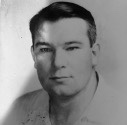


 D. Michl Lowe - Author